
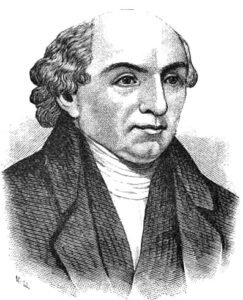
William Carey was born on August 17, 1761, in Paulerspury, Northamptonshire, England, to a family of weavers. He was largely self-taught and began his career as a shoemaker before becoming a prominent Baptist missionary and linguist.
Today, Carey is widely revered in India for his foundational role in the Bengali Renaissance and modern educational reforms, with poet Rabindranath Tagore acknowledging Carey as a pioneer in reviving the Bengali language and vernacular literature1. He is celebrated for introducing English-medium education, establishing schools for girls, and founding Serampore College, which remains one of Asia’s outstanding educational institutions.
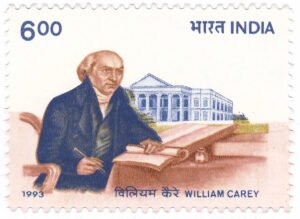
Carey’s legacy includes significant social and industrial contributions, such as advocating for the abolition of sati (widow burning) and infanticide, introducing the steam engine and modern printing presses, and promoting scientific botany. Despite criticism regarding his colonial-era perspectives and intolerance for certain Hindu practices, he is often described as India’s first cultural anthropologist and a benefactor who helped shift Indian culture toward intellectual and social progress.
William Carey: August 17, 1761 (Pury End, Paulerspury, Northamptonshire) – June 9, 1834 (Serampore – Srirampur, Kolkata, India)
Read more on William Carey:
- ‘Carey was the pioneer of the revived interest in the Vernaculars.’ spoken by Rasinpranatu Tagore to Pearce Carey in 1921. See Carey, Pearce. 1923. William Carey. New York: George H. Doran Company. p 204.
© Copyright : Graham Ward. All rights reserved.