A Question That Once Defined England — and Still Matters Today
“Are you church or chapel?”
It sounds like a small question today. But well into the twentieth century in England, it revealed a great deal about a person — their beliefs, their community, even their social identity.
At a time when most people considered themselves Christian and many attended worship regularly, everyone knew who went to the parish church of the Church of England and who attended one of the many nonconformist chapels. The distinction shaped neighbourhoods, schools, and everyday life.
Today we usually think of a church as simply a building for worship. But historically — and for many believers still — the word means something much deeper. It refers to a community of people who gather together in shared faith.
That idea goes back to the seventeenth century, when groups separated from the Church of England and formed independent congregations. These were often known as the “gathered church” — defined not by walls or architecture, but by shared belief.
And that raises a question that still matters: is a church a building, or is it the people inside it?
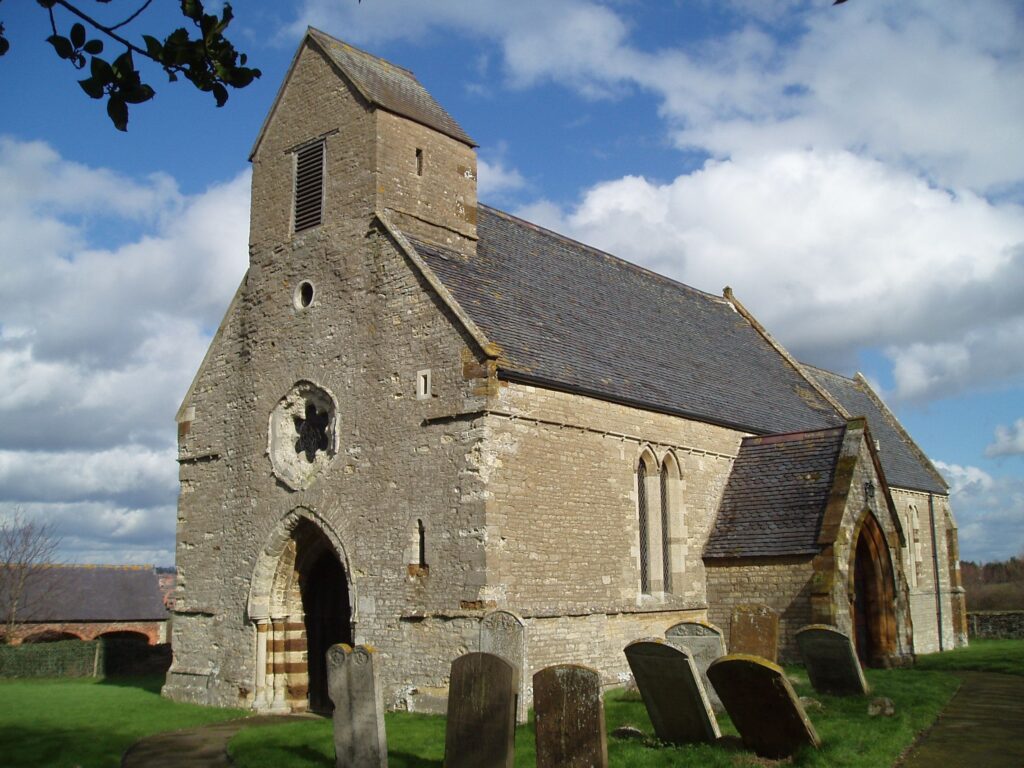
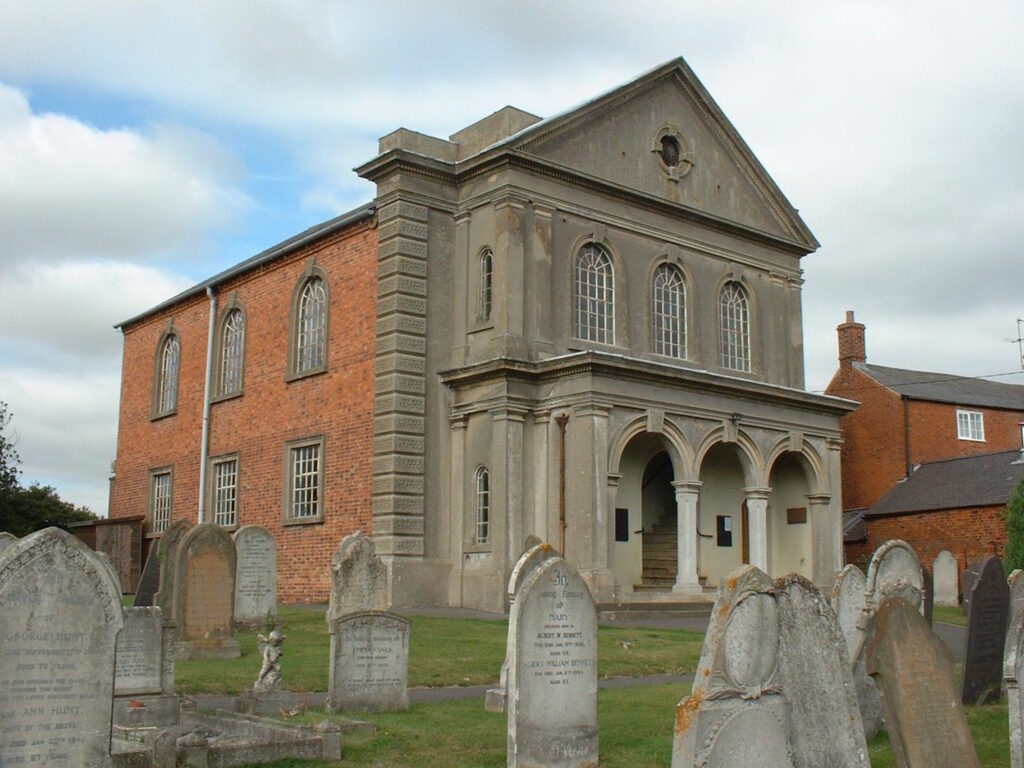
For centuries, the distinction between parish church and chapel shaped English religious life.
This work is licensed under CC BY-NC-ND 4.0


“Chapel Folk”: What the Difference Meant in Everyday Life
In the 19th century, society was split between the Anglican parish church (the Church of England) and the various nonconformist chapels. To be “church” often meant sticking to tradition, while “chapel” implied a “gathered church”—a body of people who consciously chose to separate and worship together.
Thomas Hardy captured this beautifully in Far from the Madding Crowd. His characters joked that while a Churchman could “bide in his cheerful old inn” without worrying about complex doctrines, a “meetinger” had to go to chapel in “all winds and weathers”. There was a sense that chapel-folk were “hand-in-glove with them above,” praying “out of their own heads” rather than following the printed scripts used by the Church of England.
In other words, choosing “church” or “chapel” was never just about theology. It was about identity, culture, and belonging.
Church and Chapel in the Classroom
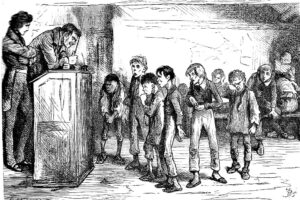
This religious divide was not limited to worship — it shaped education as well.
During the nineteenth century, England developed two main types of elementary school, reflecting the same religious distinctions seen in church life.
National Schools — Church of England Education
National Schools were founded to educate poor children according to Church of England teaching. Many later became today’s Voluntary Aided or Voluntary Controlled schools after the 1944 Education Act.
British Schools — Nonconformist Education
British Schools grew out of nonconformist traditions and aimed to provide independent, non-denominational education.
In the late eighteenth century, Joseph Lancaster pioneered a system of low-cost schooling for poor children. His work later continued through the British and Foreign School Society. After the 1870 Education Act, many of these schools became known as Board Schools.
Religion, education, and community life were deeply intertwined.
Church and Chapel in death
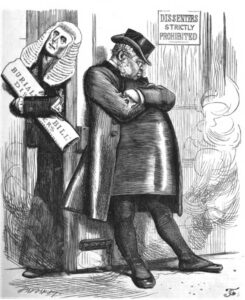
At the point when all people were equal in death, those who remained perpetuated the divisions in society to the grave. As ancient parish graveyards became overcrowded, the solution was found in the private sector. New green-field public cemeteries were opened in most towns, and London and other cities had many of these, some often well outside the existing built-up area. What characterised them was that one burial ground would have several chapels, usually at least two, one each for Anglicans and another for Nonconformists. Some cemeteries also had provision for Roman Catholics. The burials themselves were segregated into areas set aside for each denomination and extended to Quakers, Jews and Muslims. Read more on this topic
So Where Is the Church Heading Today?
If the church is the community of believers who gather to worship — usually in a dedicated building — how is that picture changing today?
The numbers tell an interesting story. Between 2012 and 2022:
- The number of churches in England grew slightly from 38,685 to 40,043.
- But membership fell from 3.714 million to 3.352 million.
- About 16,600 of these buildings belong to the Church of England.
- Around 21,000 church buildings are listed for their historic importance.
In short, there are slightly more buildings — but fewer people attending them.
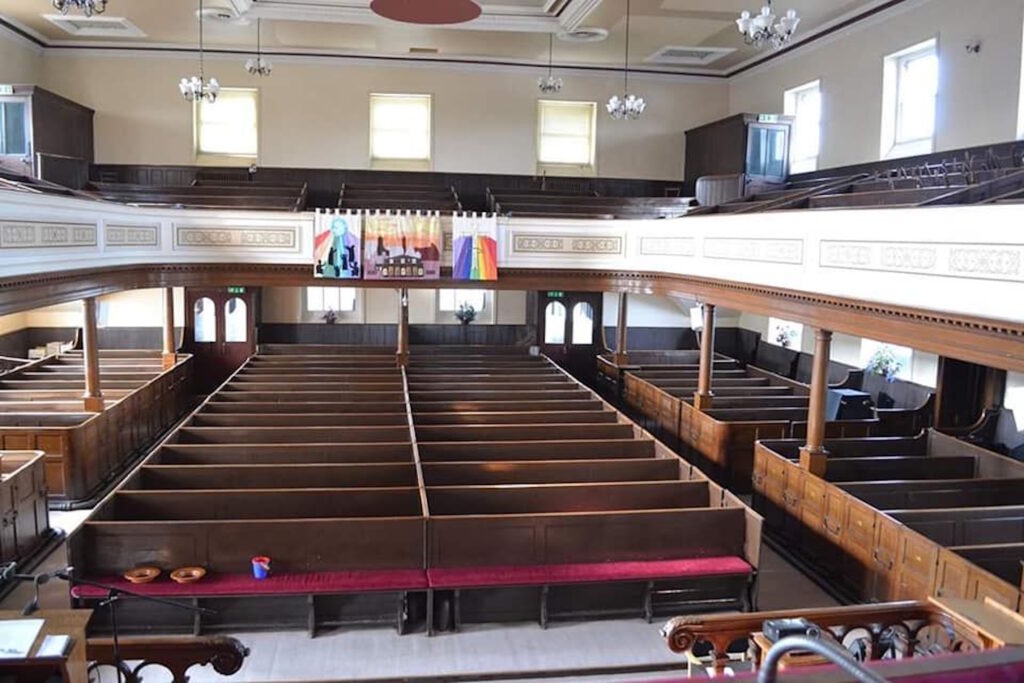
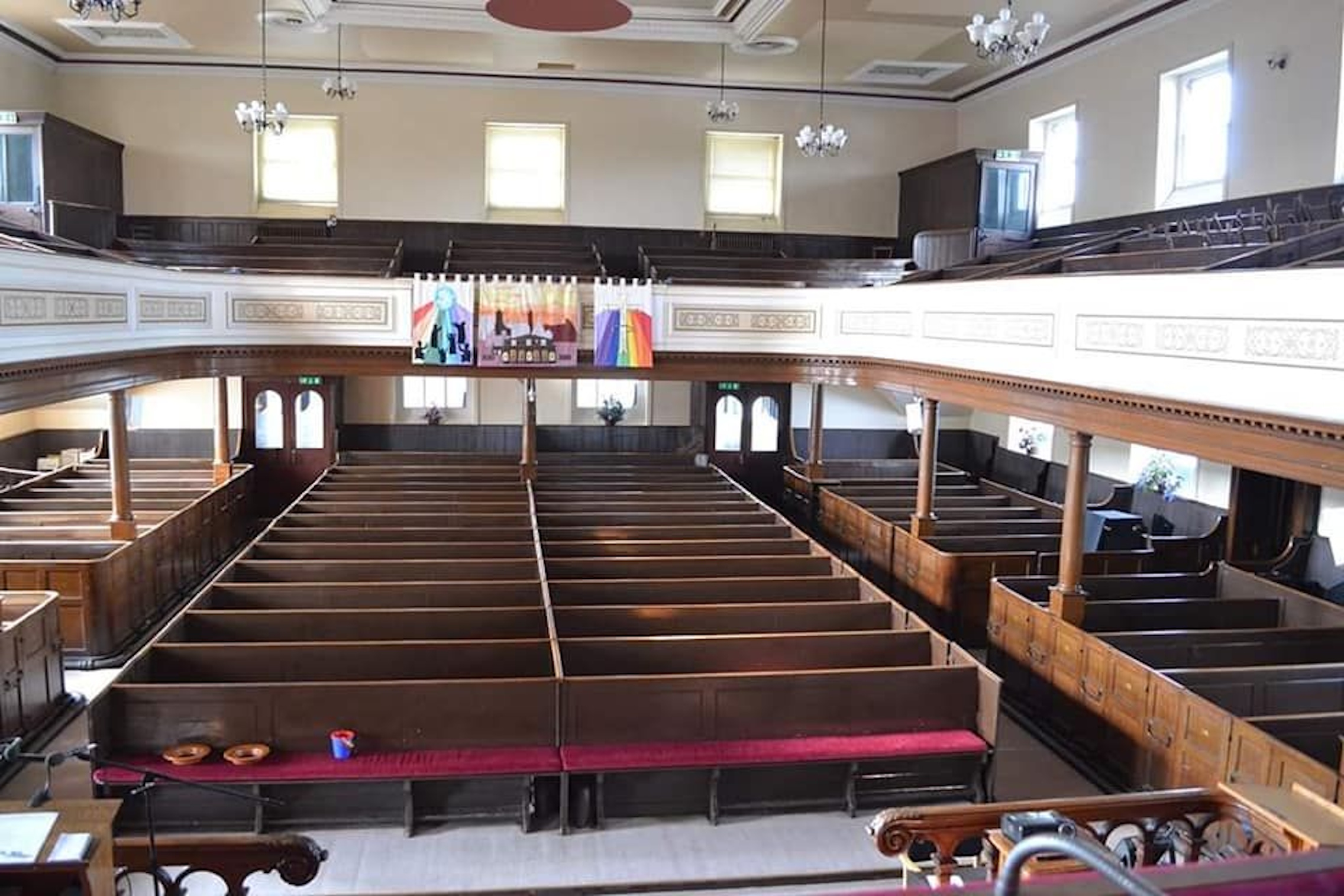
Interior of Castle Hill URC, Northampton © 2026 by Graham Ward is licensed under CC BY-NC-ND 4.0
What Are Church Buildings For?
Recently (February 2026) a UK political party suggested listing all churches to prevent their conversion into mosques. But the reality of church closures is more complex.
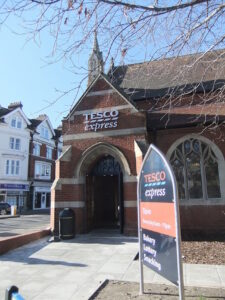
When churches close, their buildings are often repurposed rather than demolished. Many now serve communities in new ways:
- libraries
- post offices
- childcare centres
- shops
- pubs
- community facilities
Sometimes they remain places of worship, used by different congregations. Only a very small number — perhaps two dozen — have become mosques.
The real issue is usually financial. With declining attendance, trustees must decide whether to maintain, sell, or repurpose buildings. Even selling can be difficult if legal restrictions limit how a building may be used.
This raises a practical question: if the state restricts what owners can do, should it also help pay for maintenance?
Sacred Space — or Meeting Place?
Different Christian traditions also understand church buildings differently.
For Anglicans, Roman Catholics, and Orthodox Christians, churches are consecrated sacred spaces. For others, they are simply meeting places — important for gathering believers but not inherently holy.
This helps explain why some denominations are willing to sell buildings for almost any purpose, while the Church of England maintains strict rules about how closed churches can be used.
A Difficult Inheritance
All Christian denominations in Britain have closed churches in the past fifty years — in some cases, thousands.
This is not just because attendance has declined. Many churches were built for reasons that had little to do with practical need:
- Medieval churches often reflected the wealth of their patrons and were larger than local populations required.
- Victorian towns saw a surge in chapel building due to denominational divisions.
- Some buildings were constructed in the hope that impressive architecture would attract worshippers — a hope that was not always realised.
Today’s Christians inherit this vast and complex legacy. They are responsible for about 60% of all listed buildings in the UK, as well as many other properties that still require maintenance.
The Real Problem: Paying for the Buildings
In the end, the biggest challenge is financial.
Church communities need support to maintain historic buildings — not simply more restrictions on how they may use or dispose of them.
At the same time, government funding for listed places of worship has been reduced. The support fund for 2025–26 fell to £23 million (down from £42 million the previous year), with a cap of £25,000 per building. Spread across potentially 21,000 listed churches, the money can only go so far.
This is the real issue facing many churches today: how to sustain historic buildings while continuing to serve living communities.
So — Church or Chapel?
The old question still points to a deeper issue. Is the church the building, or the people who gather inside it?
The answer may shape not only how we understand the past — but also how we care for these historic places in the future.
- The First Class in English Spelling and Philosophy from the eighth chapter of the novel in the Household Edition, illustrated by Fred Barnard. https://victorianweb.org/art/illustration/barnard/nn/8.html
- Hathi Digital Library Trust and the Princeton University library https://victorianweb.org/periodicals/fun/religion/6.html
- alexliivet, CC BY 2.0 https://creativecommons.org/licenses/by/2.0, via Wikimedia Commons
© Copyright : Graham Ward. All rights reserved.