
Tin Tabernacles
These prefabricated galvanised steel buildings were a popular solution for rapidly expanding churches in the late 19th and early 20th-century. They were usually advertised in newspapers and particularly in the religious press. There were many variants, both in size and the features included. The same style of building was also used for schools, community halls and industrial premises. Many examples still survive across the UK, often repurposed into a new life.
These prefabricated buildings were also capable of being disassembled and relocated, further extending their usefulness. In the St Michael’s Road area of Northampton, there are two examples of repurposing and relocation.
Northampton Hebrew Congregation
The present-day Hebrew Congregation in Overstone Road was formed in Northampton in 1888 and acquired its site and a ‘tin chapel’ in 1890. The tin chapel was replaced by the present building in 1964.
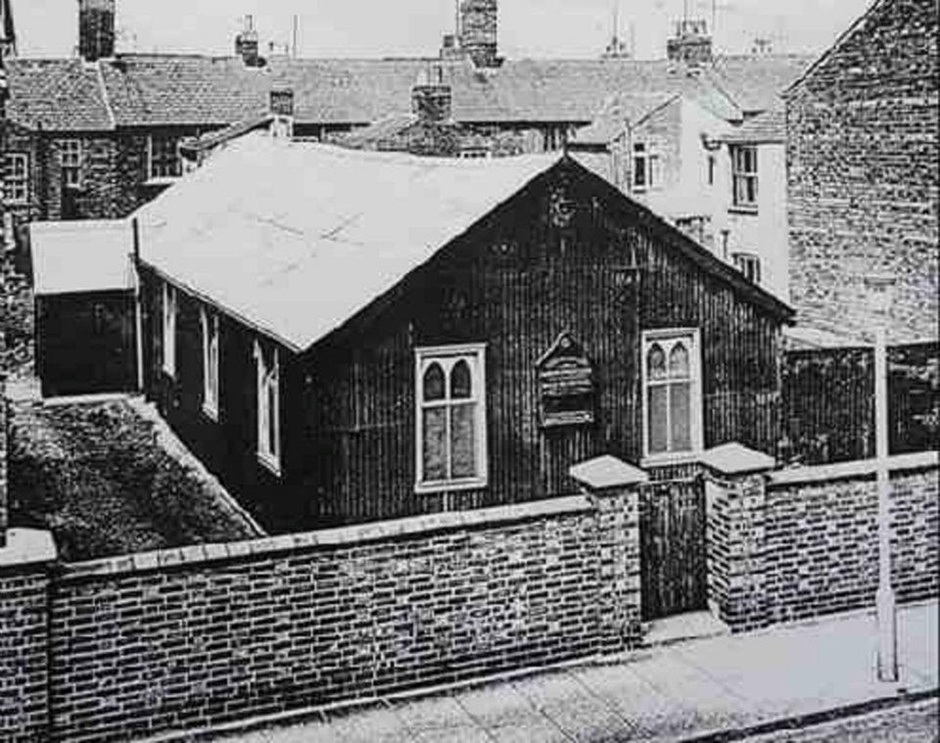
This particular tin chapel was previously used by the New Jerusalem Church1 from 1880 to 1890. The New Jerusalem Church moved to a new building on the corner of Abington Avenue and Kettering Road (East Park Parade), which is now closed, but the building remains as private premises.
Grove Road – Primitive Methodists
The story does not end here, as the tin chapel had a former life as the meeting place of the Primitive Methodists when they established themselves on the corner of Grove Road in 1879. When the Grove Road chapel was built, the tin chapel was sold to the New Jerusalem church and moved to its Overstone Road site. Re-use of these ‘portable’ tin chapels was widespread.
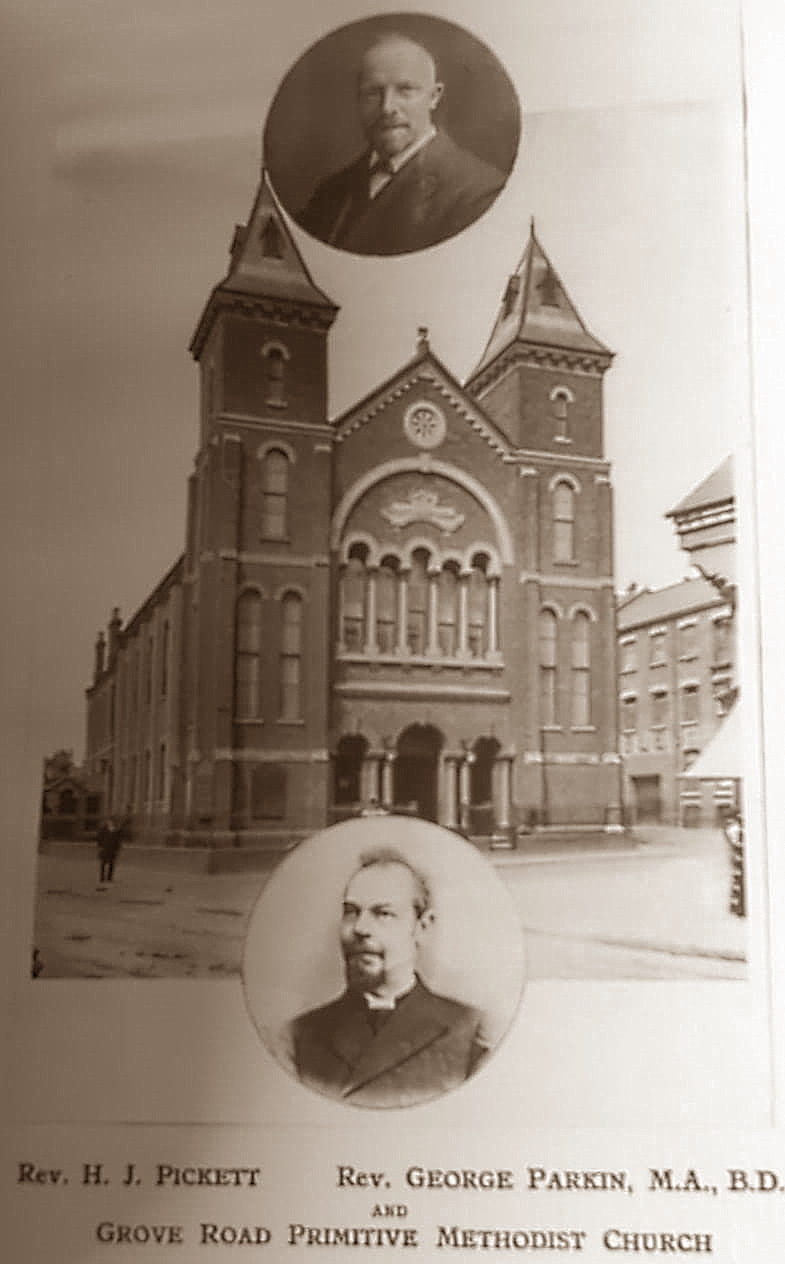
Ministers: George Parkin (1887-1898), Henry J Pickett (1898-1911)
Originally known as Kettering Road Primitive Methodist. It was renamed Queensgrove Methodist in 1962 when the Grove Road congregation merged with the nearby Queens Road chapel.
St Gabriel’s in St Michael’s Road
More on St Gabriel’s.

View of St Gabriel’s, hall and Sunday school
© Google Maps, 2019
A parallel story concerns the former St Gabriel’s church in St Michael’s Road (it is another prefabricated tin chapel, but much larger). It started as a church development project by the St Michael’s parish, but it never became financially viable and closed in 1925. The main premises were used as a community facility and later as industrial premises. However, in the 2010’s the premises returned to church use by the Wesleyan Holiness Church.
This building was originally located on the site of St Matthew’s (Kettering Road) and was moved to the St Michael’s Road site in 1894 after the completion of St Matthew’s.
St Michael’s Road Union Church (Baptist)
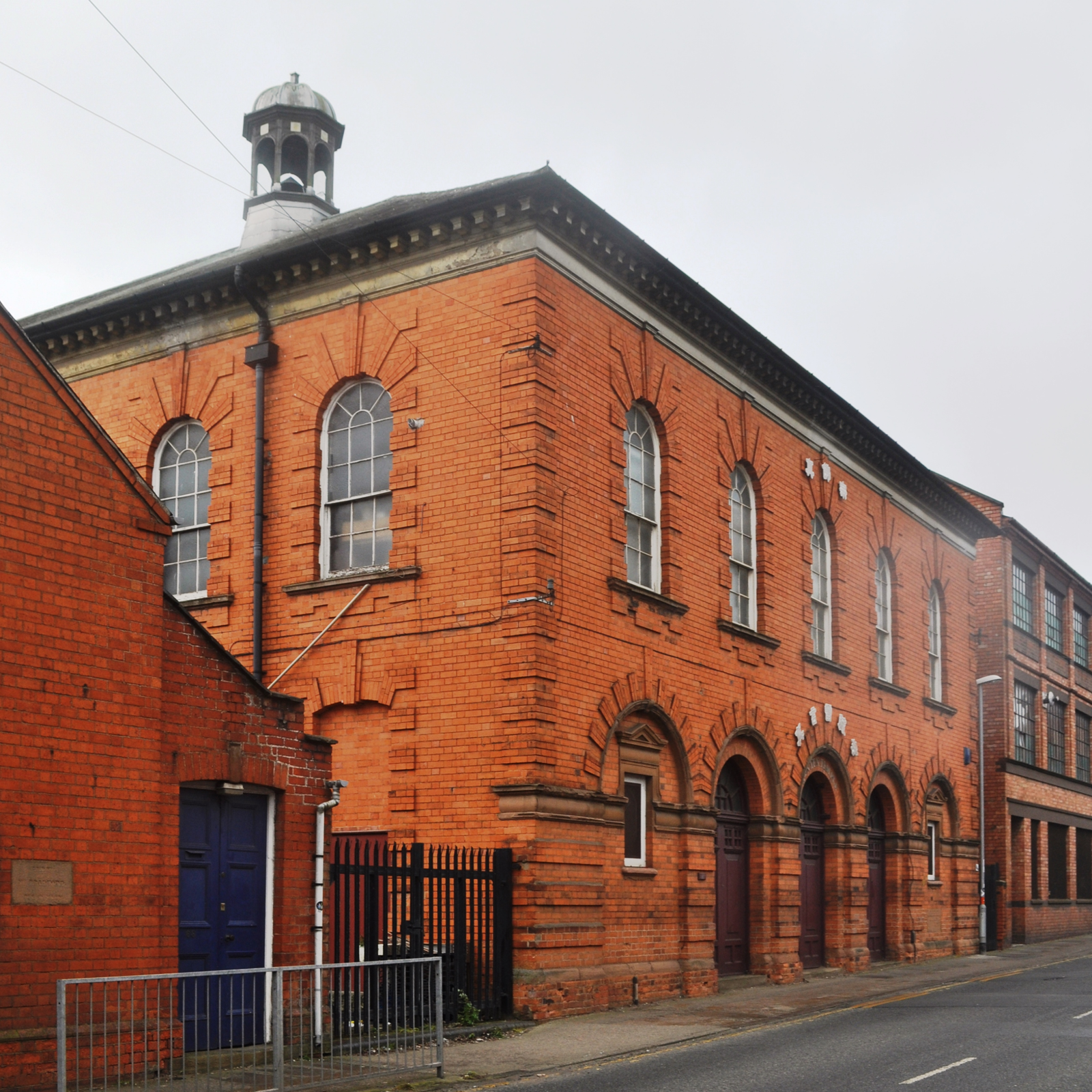
This impressive building was constructed in 1886. The architect was Samuel J Newman, and constructed by Messrs Reynolds & Son, both of Northampton. The chapel originated as a split from the Princes Street Baptist church as a result of controversy during the Bradlaugh crisis2. After closure in 1934, the building was used for warehousing. However, it returned to use as a place of worship as a Buddhist Temple in the late 21st-century.
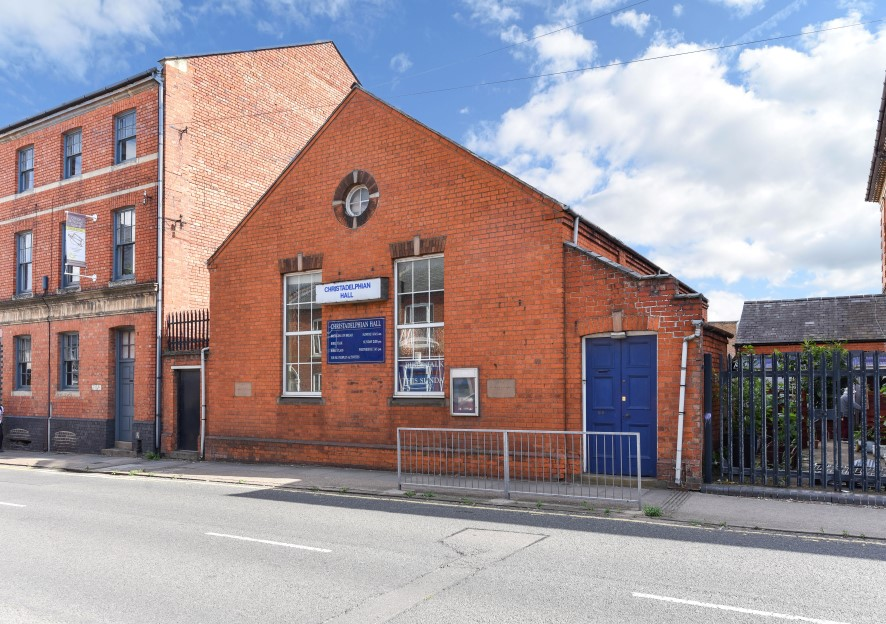
The smaller red-brick building to the left of the main church building was originally built as a Sunday School for the main chapel. This building was later reused as a meeting place for Christadelphians for many years3. More recently, it has become the home of the Indian Hindu Welfare Organisation (IHWO) and Hindu Mandir.
Further reading
What is a Tin Tabernacle?
Pre-fabricated churches, often called ‘iron churches’, ‘iron chapels’ or ‘tin tabernacles’, were developed in the mid-19th century.
Smith, Ian (2004), Tin Tabernacles: Corrugated Iron Mission Halls, Churches & Chapels of Britain, Camrose Media Ltd, ISBN 978-0-954712-60-0
Smith, Ian (2010), Tin Tabernacles Postcard Album, Camrose Media Ltd, ISBN 978-0-956613-20-2
- The New Jerusalem Church, also known as Swedenborgians, is a global Christian movement based on the theological writings of the 18th-century Swedish scientist and mystic, Emanuel Swedenborg. They were founded in London in 1787 and spread widely across the UK. Membership declined rapidly after World War 2.
- The Bradlaugh crisis (1880–1886) was a major British constitutional and religious controversy surrounding Charles Bradlaugh, an outspoken atheist and radical who was repeatedly elected as Member of Parliament for Northampton, who refused to take the religious Oath of Allegiance.
- The Christadelphians are a Unitarian Christian group that emerged in the 19th century, dedicated to living by original first-century Christian teachings. As Unitarians, they reject the concept of the Trinity (Father, Son, and Holy Spirit) and are therefore outside the family of the majority of Christian churches – Protestant and Catholic.
© Copyright : Graham Ward. All rights reserved.