
Some villagers will remember the wooden church that stood on the plot of land between No 4 and No 6 Bugbrooke Road for just over 70 years. Built in 1933 and demolished in 2005, the small wooden church building was at one time an integral part of village life and had a very interesting and intriguing history. The Mission as it was called certainly played an important part in my early life and I’m sure other long-term residents will have memories of Sunday School, Youth Club and outings to the seaside.
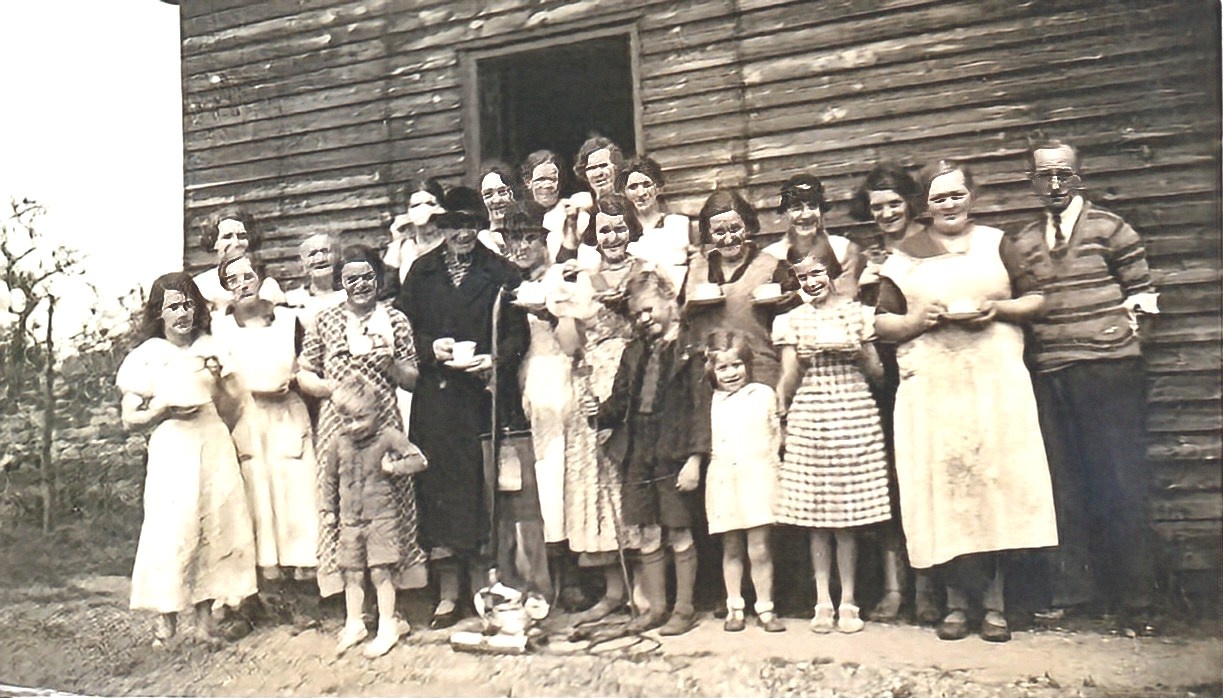
The Kislingbury Baptist Chapel was well established in the village from the early 19th Century and in 1931 they welcomed a new minister Reverend Douglas Craig from Edinburgh. He was described as young and enthusiastic and he soon became very popular amongst the congregation. But his popularity with the deacons of the Baptist Church was short lived and just under a year later whilst Rev Craig was on holiday back in Scotland, he received a letter from the deacons telling him that him that there were serious charges against his character and that he should not return to the village. Rev Craig immediately made his way back to Kislingbury to clear his name, a journey that took him just 9 hrs in Sept 1932. On his return a few notable villagers supported Rev Craig and demanded that he should not lose his job if the charges were untrue.
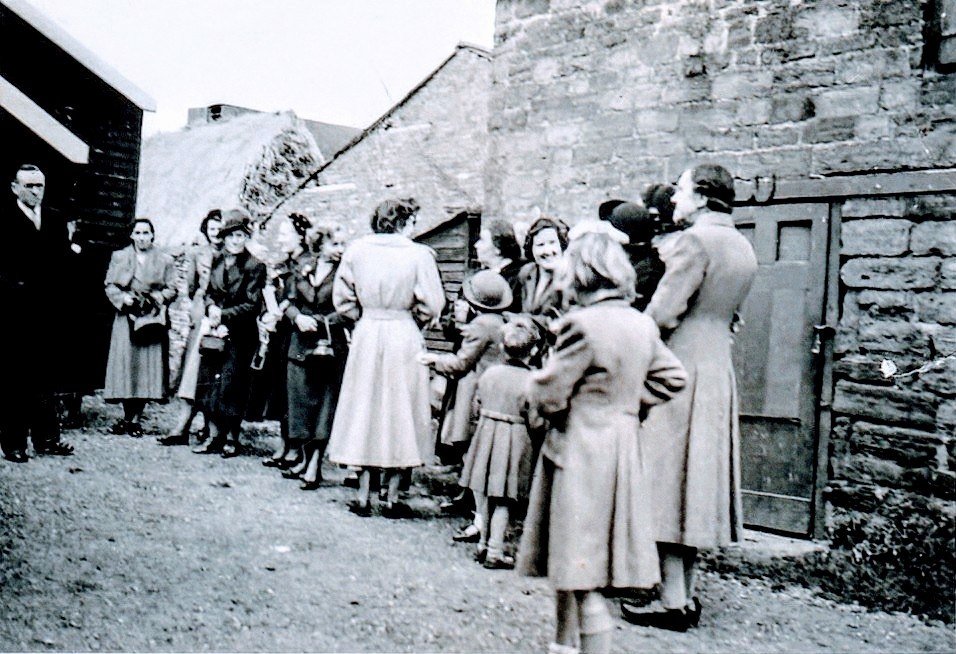
Craig continued to protest his innocence and this culminated in a meeting on 7th Sept 1932, the charges against him were never made known publicly, they were described as “too bad to be mentioned” and “of a very unsavoury nature”. The meeting was well attended but only certain individuals were allowed to vote whether to accept the minister’s resignation, it came down to 43 for his resignation and 32 against. Baptist Church documents record much disorder after the meeting and a petition of support for Rev Craig was signed by 308 people and the sum of £8.0.6d was collected for him.
This was a time of much upheaval in the village and caused a real split within the Baptist Church, the support for Rev Craig was substantial and he was persuaded to remain in the village and help those who left the Baptist Church to form their own independent Church.
The schism in the Baptist congregation was reported in a local newspaper soon after with the announcement of the first Sunday service of “Kislingbury Independent Mission” to be held in the village, with plans to build a new church, the first service was held in a garage of commodious proportions adjacent to “Sunningdale” not far from the Baptist Chapel. It’s reported that two services were held with around 80 people in the morning and then nearly 200 people crowded in around the white washed building in the evening, a large proportion of the congregation described as young folk. The same day just 40 people attended the Baptist service, half the normal attendance.
Following this, services were held in the cow shed belonging to Mr Dunkley, this was just off of Beech lane. A former resident Jesse Hall, remembers her parents scrubbing out the shed ready for the Sunday services, they would bring in an old pedal organ each week, she recalled that the services were often accompanied by the sound of mooing cattle along with their bowel movements and the accompanying smell!
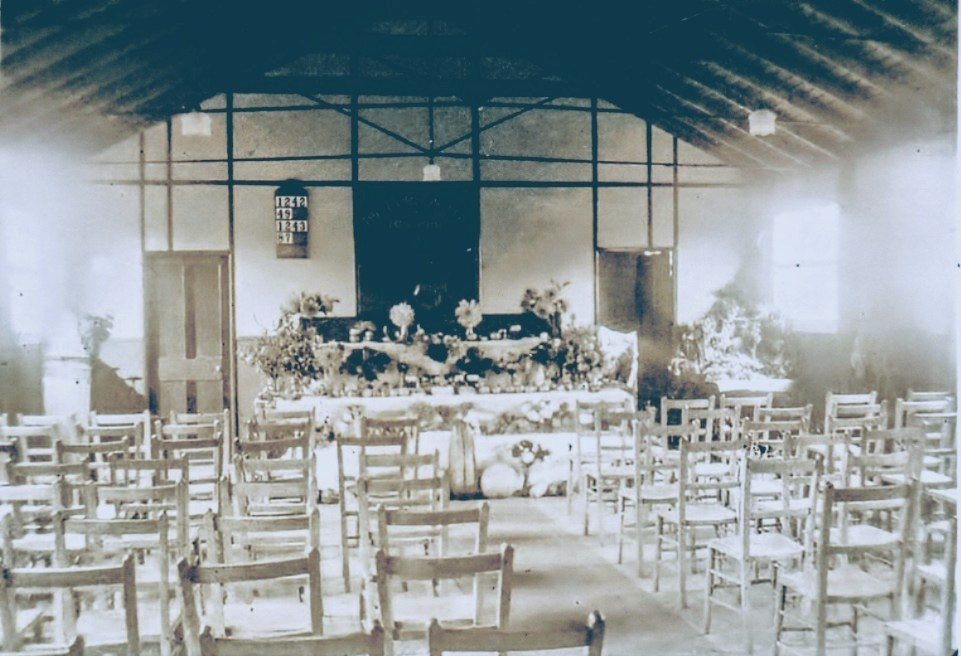
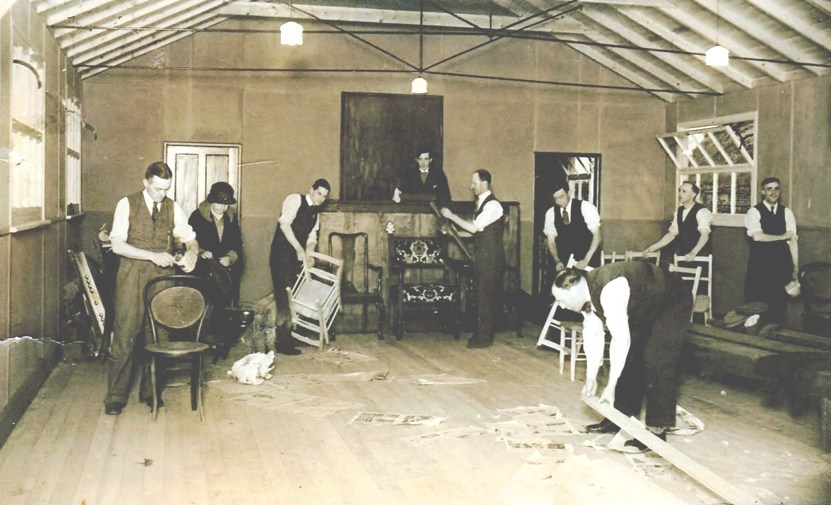
A plot of land in the village was then secured, donated by the owner of No 6 Bugbrooke Road. A building was planned and during March to May 1933 a wooden sectional building was erected on the site, most of the work being carried out by villagers themselves. A list of those involved can be seen in a framed document that hangs in the Village Hall.
The Mission thrived as a place of worship for many years. It was initially led by Rev Craig but he later married a local girl and moved back to Edinburgh. I suspect that his involvement with a local girl may have had something to do with the allegations made by the Baptist deacons, but this is only speculation on my part! The church continued with a strong foundation of villagers and lay preachers who would attend each Sunday for the sermon. It continued as a church until the mid 1980’s, a service each Sunday, a Sunday School, Youth Club, outings to the seaside even marriages were performed there.
Due to dwindling numbers and the loss of key members difficulties arose in it continuing as a Church. A solution was found when the local Boys’ Brigade was looking for a home and the building was eventually handed over to them for the sum of £1. A group of trustees oversaw the running of the building, funds were raised by frequent jumble sales, bingo sessions and sing-alongs.
In the early 1990’s another problem arose when a particular minister associated with the Baptist Church became interested in taking over the Mission for religious purposes and he called into question the use and running of the building. At this point both the Charities Commission and solicitors were involved. There was overwhelming support for the Boys’ Brigade to continue overseen by the team of trustees.
In 2002 the Boys’ Brigade folded and the building by that time desperately needed repairs, the trustees began to look at their options, the building could be sold off but it was feared that it would undoubtedly fall into the hand of developers who would want to build on the land. A happy solution was found when the occupants of No 6 Bugbrooke Road offered to buy the building and land, with a view to demolishing the building but with a covenant that the land would not be developed. The Mission was sold in 2004, the purchasers demolished the building and in 2005 a ceremony was held where a tree was planted in the garden of No 6 Bugbrooke Road and a plaque was placed there in memory of the Mission. The land the Mission had stood on was again now part of the original house and it’s garden.
I’ve been unable to ascertain if the tree is still there or the plaque. The house at No 4 Bugbrooke Road is a converted barn and is called Mission Cottage. I’m hoping that there are still some villagers that will have memories of the Mission, I have a collection of documents that include names of attendees both in 1940/50’s and again in 1970’s when there was a flourishing Youth Club. I also have some hymn books and a few photos. All of these will be going into the Kislingbury archives. If anyone in the village has photos, memories or anything else about the Mission that they would like preserved then please email me so that I can include these in the archives.
Sue Ward
This is a guest post by Sue Ward. Sue was born in Upton, and moved to Kislingbury when she was seven. After a career including the Metropolutan Police, Northamptonshire Police and has worked for the International Police Task Force in Bosnia and Herzegovina.
This article first appeared in Kislingbury News Jun-Jul 2026.
© Copyright : Graham Ward. All rights reserved.